Blogs
AI hiring you can audit
Fairness in hiring is being rewritten from a claim you make into a record you produce. New York City already requires an annual independent bias audit of an automated employment decision tool and puts that obligation on the employer using the tool, not the vendor selling it. The EU AI Act's recruitment rules apply from 2 December 2027. India's DPDP Act brings its substantive obligations into force on 13 May 2027. Three regimes, one shared demand: reconstruct, after the fact, the reasoning behind a decision about a person.
Most first rounds cannot. A phone screen leaves four lines typed into an ATS field. A one-way video screen leaves a recording nobody rewatched. Neither answers the question a candidate, an auditor or your own counsel will eventually ask, which is why this person got this outcome and the person assessed an hour earlier got a different one.
Bias does not disappear because a model is involved; a rubric written by people carries the judgment of the people who wrote it. What is achievable is fairer and checkable, and it is mechanical: the same dimensions and the same weights for everyone inside an experience band, plus a stored trail of what was asked, what was done and how each part was weighted — so a human can read the case back and overturn it.
Posts in Fair, auditable AI hiring
The EU AI Act deadline moved. The one that binds you didn't.
August 18, 2026EU AI Act recruitment rules: high-risk obligations moved to December 2027, but Article 50 and the emotion-recognition ban already apply.
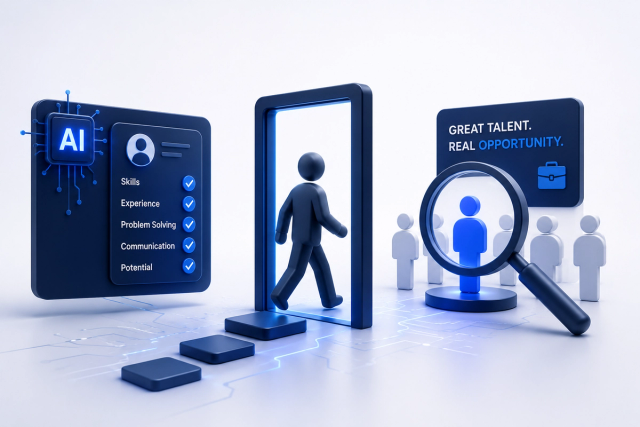
The candidates walking away aren't rejecting AI
August 8, 202638% of candidates have abandoned a hiring process over an AI interview. Almost none of them object to the AI. What AI interview disclosure should actually say.

Want to see how the scoring holds up?
Every score Recio produces traces back to the moment in the transcript or the lab that produced it. The trust framework sets out how, and what a human still decides.